

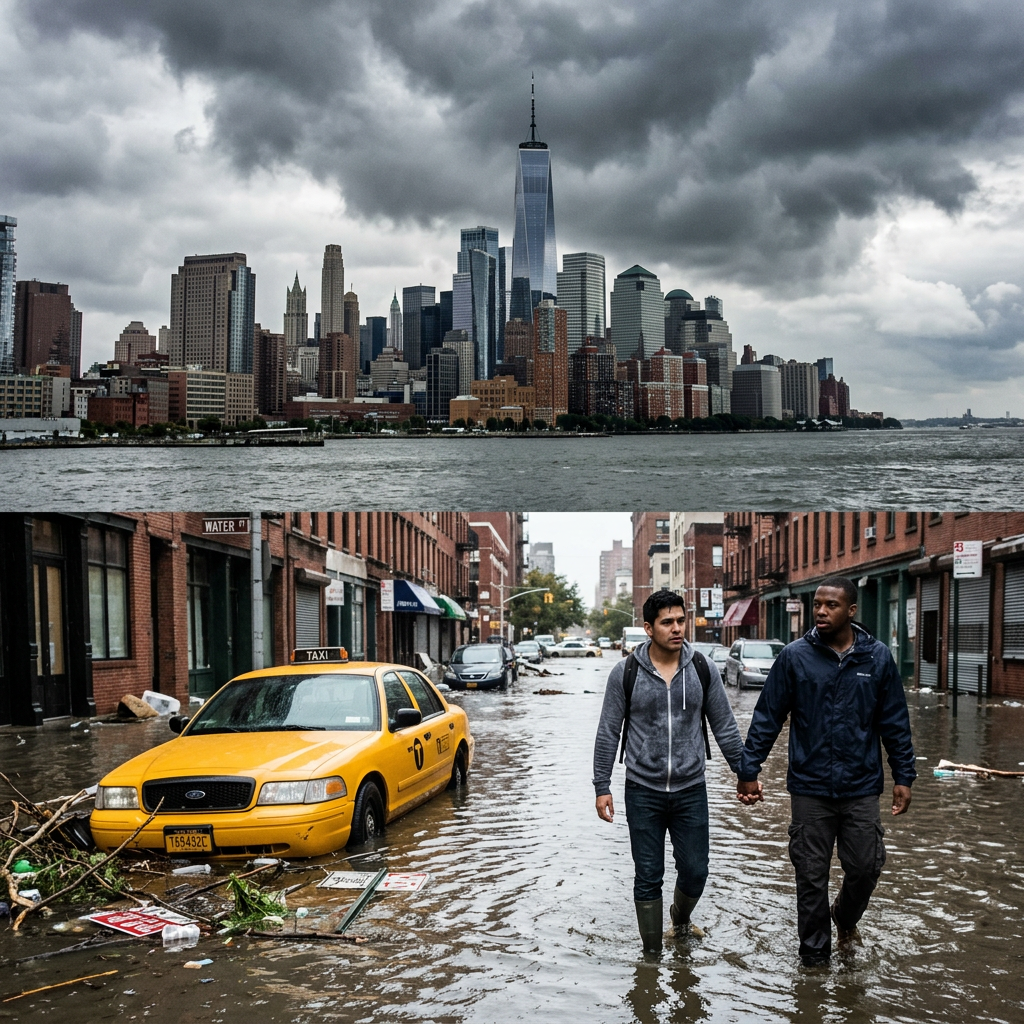
Pip: Some trips go exactly as planned. And then there's New York City in late October 2012, which had other ideas entirely.
Mara: Brett Hayhoe kicks off the World Traveller Series with one of those other trips — a firsthand account of riding out Hurricane Sandy in Manhattan, covering everything from a surreal airline phone call to a flooded city seen through a car windscreen.
Pip: Let's start with the storm itself, and how you survive it when you're fifteen floors up and the building starts moving.
Surviving Hurricane Sandy
Mara: The setup here is simple: a trip to New York that was supposed to end with a normal flight home, interrupted by one of the most destructive storms in American history arriving with, as the post puts it, "its own itinerary."
Pip: The first obstacle wasn't the storm — it was the airline. A call to QANTAS to rebook the flight produced a representative who insisted the departure was on schedule, apparently unconcerned that JFK was underwater.
Mara: The post captures that exchange precisely: "every other carrier in the world had cancelled their flights in and out of JFK on account of the runway sitting under ten feet of water, and yet QANTAS remained confident of an on-time departure."
Pip: That's the kind of customer service that really restores your faith in aviation.
Mara: It did not resolve the situation. What resolved it was Alan — a former airline employee who took the phone and spoke what the post calls "a language entirely his own," insider terminology that turned a stalled call into a confirmed rebooking inside two minutes.
Pip: Alan is the person you want in a crisis. The post is clear on that.
Mara: The crisis continued indoors. Alan's apartment is on the fifteenth floor, and with the elevator taken offline for safety, they waited out the storm up there. At a certain point, the building began to move — side to side, gently but unmistakably. Both of them registered it at the same moment.
Pip: Their response, spoken in unison: "now I'm officially worried." Which, for a building engineered to do exactly that, is a reasonable human reaction.
Mara: They were fine. But the post notes that fifteen floors changes the experience in ways ground level never does — the swaying was genuinely new, even for someone raised in Cairns who spent years reporting on cyclone seasons for 4CA.
Pip: Cairns prepares you for wind and rain. It does not prepare you for the building itself becoming part of the weather.
Mara: After the storm, Alan drove them through Manhattan to check on Heritage of Pride's downtown offices. The offices were fine. The city was not. Subway stations five floors underground had filled completely and overflowed onto the streets. Both rivers had broken their banks. On the return trip, the power was out, the traffic lights were dark, and Manhattan's intersections were operating on instinct alone.
Pip: Organised chaos — though the post notes the organisation was largely aspirational.
Mara: Alan got them back to Astoria unscathed. The post closes on a note that's almost affectionate: Sandy was not on the itinerary, but the visit — the flooded streets, the swaying building, the friend who knew exactly what to say — landed in a category of its own.
Pip: Some of the best travel stories are the ones nobody planned. That seems to be the premise the whole World Traveller Series is built on.
Mara: Extreme weather, a city underwater, a building that moves — and somehow the takeaway is that it was memorable rather than just miserable.
Pip: Next time, apparently, it's Provincetown for Bear Week. The itinerary is already looking more cooperative.
Discover more from Ask Brett
Subscribe to get the latest posts sent to your email.
