

World Traveller Series II — Events & Incidents ~ Episode 1
by Brett Hayhoe

There are trips that go precisely as planned. The flight departs on time, the weather cooperates, the city behaves itself, and the return journey is an uncomplicated matter of showing up with luggage and a boarding pass.
And then there are the other trips.
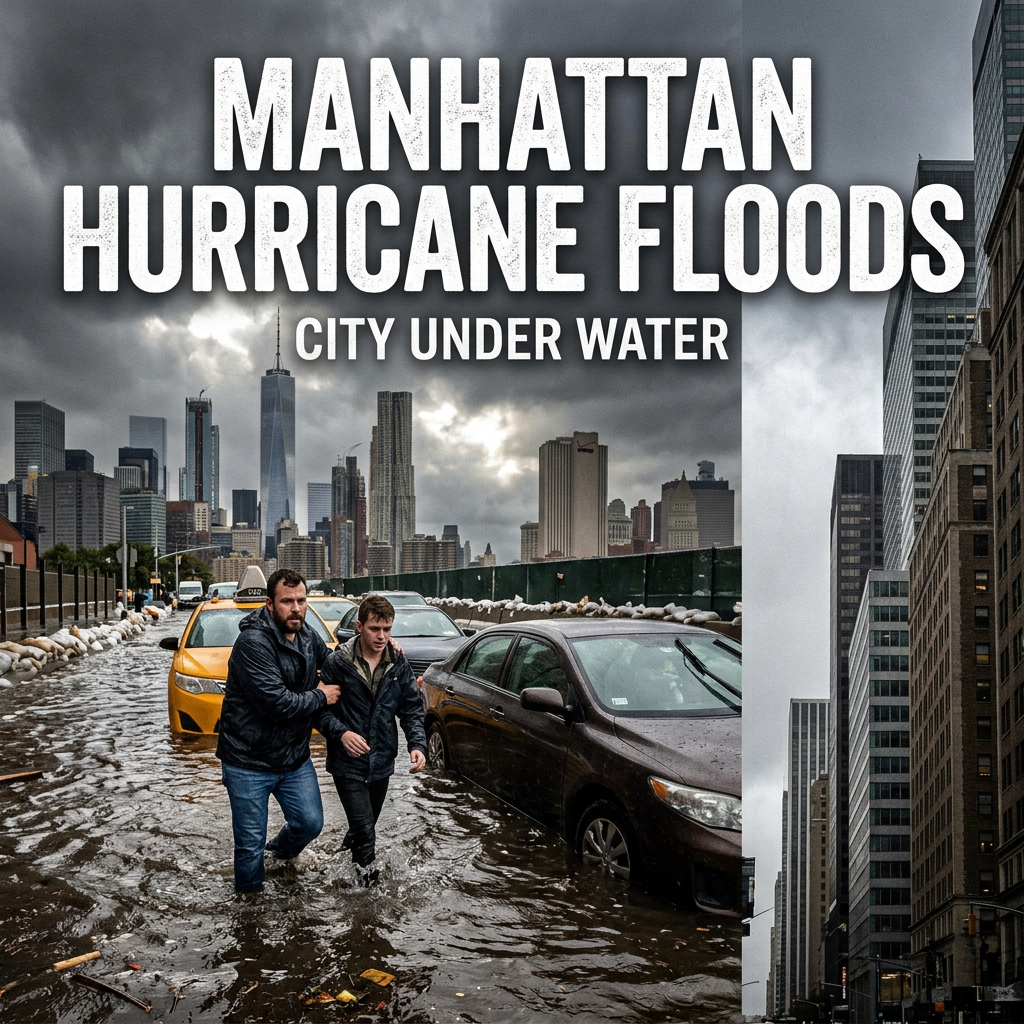
New York City in late October 2012 had no intention of behaving itself. Hurricane Sandy — the storm that would go on to be described as one of the most destructive in American history — had its own itinerary, and it was considerably more ambitious than anyone else’s.
The city, the storm, and an extended stay that nobody had planned. This is how that went.
The Phone Call — and the QANTAS Revelation

When it became plain — as plain as the nose on your face — that the rain and the wind were not stopping anytime soon, the sensible course of action was a phone call to QANTAS to arrange an alternate departure date.
The call began like any other. It did not remain that way for long.
The airline’s assistant, in a tone of complete composure, advised that the flight was as scheduled and the departure time had not changed.
The response was carefully worded: that faith in QANTAS had, in that moment, been entirely restored — given that every other carrier in the world had cancelled their flights in and out of JFK on account of the runway sitting under ten feet of water, and yet QANTAS remained confident of an on-time departure. The sarcasm, it must be said, was extreme. The disbelief was genuine. Neither appeared to register. The assistant doubled down and repeated the same information with the same composure, apparently unmoved by the image of a submerged runway.
At this point, Alan took the phone.
Alan to the Rescue — Airline Talk and Two Minutes
Alan — a former airline employee, a man who knows exactly which words to say in which order — took the receiver and proceeded to speak what can only be described as a language entirely his own. Gobbledygook, technically. Airline talk, professionally. The specific combination of codes, references, and insider terminology that transforms a stalled conversation into a resolved one.
Within two minutes, the return flight had been rebooked. Seat confirmed. Due consideration given to the weather and the hurricane’s well-documented unpredictability. Done.
There are people who are useful in a crisis. Alan is one of them.
The Apartment — Fifteen Floors Up and Swaying

Alan’s apartment occupies the fifteenth floor of its building, sharing that level with only one other dwelling. A fine place to live under normal circumstances. Under hurricane circumstances, a fine place to wait it out — the building’s elevator having been taken offline for the entirely sensible safety reasons that elevators and hurricane-force winds tend to produce.
The storm was weathered, quite literally, inside the apartment.
It was during this period — at a particular moment that arrived for both occupants simultaneously and without prior arrangement — that the building began to move. Side to side. Gently but unmistakably. The kind of movement that fifteen-floor buildings are, in fact, engineered to accommodate, but that the human body, with no prior experience of being inside a swaying building, does not immediately interpret as reassuring.
The words, spoken in unison: now I’m officially worried.
They were fine. The building was fine. But the fifteen floors made a difference that ground level never would have.
The Drive — Manhattan Under Water

Alan had a car. Alan also had a responsibility — as someone connected to Heritage of Pride — to check on the organisation’s basement-level offices in downtown Manhattan. The drive was taken together.
The offices were fine. That was the good news.
The drive in provided the less comfortable news, delivered via the windscreen in the form of a city that had, by any reasonable measure, been swallowed.
Manhattan’s subway stations run deep — many of them five floors underground by the time the platforms are reached. On this occasion, the water had found all of them, filled them entirely, and continued upward until it emerged onto the streets above. Both the Hudson and the East River had broken their banks. The island was, in the most literal sense, covered. The subway system — that extraordinary, relentless, round-the-clock operation that the city depends on for everything — was completely impotent.
It was quite a thing to see.
The return journey was, if anything, more memorable than the drive in. The electricity was out across most of the affected area. The traffic lights were among the casualties. What this produced, in the middle of Manhattan, was something approaching organised chaos — though the organisation was largely aspirational. People, it turns out, are not good without signals to tell them when to cross or not. The instincts that traffic lights ordinarily suppress tend to reassert themselves in unhelpful ways.
Alan is a very good driver. The return to Queens, across the road bridge and back to Astoria, was completed without incident. Unscathed. Dry. A tad rattled, but intact.
The Aftermath — Foliage and Familiarity

En route back, a brief tour of the immediate area offered a first-hand view of Sandy’s handiwork. The visible damage was predominantly to the foliage — trees down, branches scattered, the greenery of the streets comprehensively rearranged. Better foliage than human carnage, as observations go, but upsetting nonetheless.
As for fear: there wasn’t much of it. Being born in Cairns — a city that takes its cyclone seasons as a matter of annual routine — and having spent time reporting for 4CA during those seasons produces a certain familiarity with extreme weather. The wind is known. The rain is known. The general shape of a serious storm is not unfamiliar.
The difference, this time, was the altitude. Fifteen floors changes the experience in ways that ground level never does. The swaying was new. That part was not in the Cairns reporting handbook.
Conclusion
Hurricane Sandy was not on the itinerary. Neither was an extended stay in New York, a drive through a flooded Manhattan, or the particular sensation of being inside a building that has decided to move in ways buildings generally do not.
What it produced, beyond the logistical inconvenience and the occasional moment of genuine concern, was one of those travel experiences that could not have been planned and cannot be easily forgotten. The city at its most exposed. A friend who knew exactly what to say on a phone call. A storm that, whatever damage it wrought, did not manage to make the stay anything less than memorable.
New York has been visited many times. This particular visit remains in a category of its own.
The World Traveller Series is written and produced by Brett Hayhoe — publisher, editor and administrator of Q Magazine. Read more at Q Magazine Blogs — Ask Brett Podcasts — Ask Brett | Hayhoe YouTube Channel
Next: Provincetown for Bear Week with Paul.
Discover more from Ask Brett
Subscribe to get the latest posts sent to your email.