

The World Traveller Series — Entry No. 1
Written by Brett Hayhoe

Introduction
There are cities, and then there is New York.
I’ve stood at the edge of the Grand Canyon and felt genuinely small. I’ve wandered the ancient streets of Rome and felt the full weight of history pressing down on my shoulders. But nothing — nothing — has ever hit me quite the way that first glimpse of the Manhattan skyline did from the upper deck of the Staten Island Ferry at dusk, the city ablaze in gold and steel, impossibly tall, impossibly alive.
This is the first entry in what will become a long-running series: The World Traveller. We’ll go everywhere — Marrakech’s medinas, Tokyo’s backstreets, the windswept coasts of Patagonia. But we start here, in New York City, because every great journey deserves a great first chapter. And NYC is nothing if not the greatest opening line ever written.
So why does a city of 8.3 million people, perpetual noise, eye-watering rents, and subway systems that feel like organised chaos still capture the imagination of travellers from every corner of the earth? Why do so many people — myself included — return again and again, not just to visit, but almost compelled to, as if they left something of themselves behind on the pavement?
Let’s find out.
The City That Never Stops Moving
New York doesn’t welcome you gently. It greets you like a firm handshake from a stranger who immediately wants to show you something incredible.
The energy is the first thing you notice — a low, constant hum beneath your feet that isn’t quite sound and isn’t quite feeling, but something in between. The streets pulse with purpose. Everyone is going somewhere. Cyclists dart between yellow cabs. Street vendors negotiate with tourists. A busker in the 14th Street subway station plays a saxophone rendition of Miles Davis with the kind of casual brilliance that would headline a jazz festival anywhere else on earth.
This relentlessness is, paradoxically, what makes New York so exhilarating. The city demands your full attention, and in return, it gives you its full self.

A World in One City
Spend a single day in New York and you’ll eat a flaky croissant in a French bakery in the West Village, argue good-naturedly with a Sichuan restaurant owner in Flushing about which dumpling is superior, stumble into a tiny Ethiopian restaurant in Harlem that will ruin all other stews for you permanently, and finish the night with a Neapolitan slice so perfect it will make you briefly question your life choices.
This is the quiet miracle of New York: it contains multitudes. With over 800 languages spoken within its five boroughs, it is the most linguistically diverse city on the planet. Entire neighbourhoods retain the cultural soul of the countries their residents left behind — the Dominican Republic lives in Washington Heights, Little Italy breathes in Arthur Avenue in the Bronx, Chinatown stretches across lower Manhattan and into Brooklyn, and Astoria in Queens remains stubbornly, gloriously Greek.
To walk through New York is to take a passport-free tour of the world. No other city on earth offers this in quite the same density, the same authenticity, the same sheer square-footage of human variety.
Culture on Every Corner
The Metropolitan Museum of Art alone could consume a week and still leave you wanting. But New York’s cultural footprint goes far beyond its institutions. Art here is democratic and inescapable. It’s in the KAWS murals that appear on the sides of buildings in Brooklyn. It’s in the poetry taped to the inside of a laundromat window in the Lower East Side. It’s in the theatre — not just Broadway’s spectacle, but the tiny black-box theatres in Hell’s Kitchen where tomorrow’s legends are performing tonight to audiences of thirty.
The city gave the world jazz, hip-hop, abstract expressionism, punk rock, street photography, and the modern concept of fashion week. It has hosted Basquiat and Bernstein, the Harlem Renaissance and the New York School. It is, and has long been, the place where artistic movements are born, argue with each other, and become history.

A City That Belongs to Everyone
If New York has a defining social characteristic, it is this: it has always made room.
The city’s multiculturalism isn’t a policy or a talking point — it’s a lived, daily reality that you feel from the moment you step onto its streets. Neighbourhoods don’t just tolerate difference; they are built from it. New York has long been a place where people arrive as outsiders and, often within a single generation, become the very fabric of the city itself. That open, restless, perpetually self-reinventing quality is what has made it a beacon for immigrants, artists, dreamers, and anyone who has ever felt too big, too strange, or too themselves for wherever they came from.
Nowhere is that spirit more visible — or more joyfully, defiantly expressed — than in New York’s LGBTIQA+ community. The city holds a singular place in queer history: it was here, on the cobblestones outside the Stonewall Inn in Greenwich Village in 1969, that patrons fought back against a police raid and ignited the modern LGBTIQA+ rights movement. The Stonewall Inn is now a National Monument — the first in American history dedicated to LGBTIQA+ history and civil rights — and Christopher Street remains a place of genuine pilgrimage for visitors from around the world.
Each June, that history is celebrated with extraordinary exuberance at NYC Pride, one of the largest and most iconic Pride events on the planet. The main march draws millions of participants and spectators lining Fifth Avenue and beyond — a river of colour, music, politics, and pure joy that stretches for hours. But Pride in New York is never just a single day. The entire month of June fills with events, film screenings, rooftop parties, community gatherings, and performances that span every borough. It is a month-long reminder that New York, at its best, is a city where everyone is not merely tolerated but genuinely celebrated.

This inclusive spirit extends far beyond Pride month, woven into the everyday character of neighbourhoods like Hell’s Kitchen, the West Village, Jackson Heights in Queens (home to one of the most diverse and proudly LGBTIQA+-friendly communities in the entire country), and Park Slope in Brooklyn. Queer-owned bars, bookshops, community centres, and cultural spaces aren’t novelties in New York — they are institutions, some of them decades old, holding history and community in equal measure.
To travel to New York as a member of the LGBTIQA+ community, or as an ally, is to visit a city that has fought — sometimes at great cost — for the right to be exactly who it is. That history gives the city’s openness a depth and a weight that you don’t find everywhere. It isn’t just tolerance. It’s hard-won, loudly celebrated, fiercely defended belonging.
The Architecture of Ambition
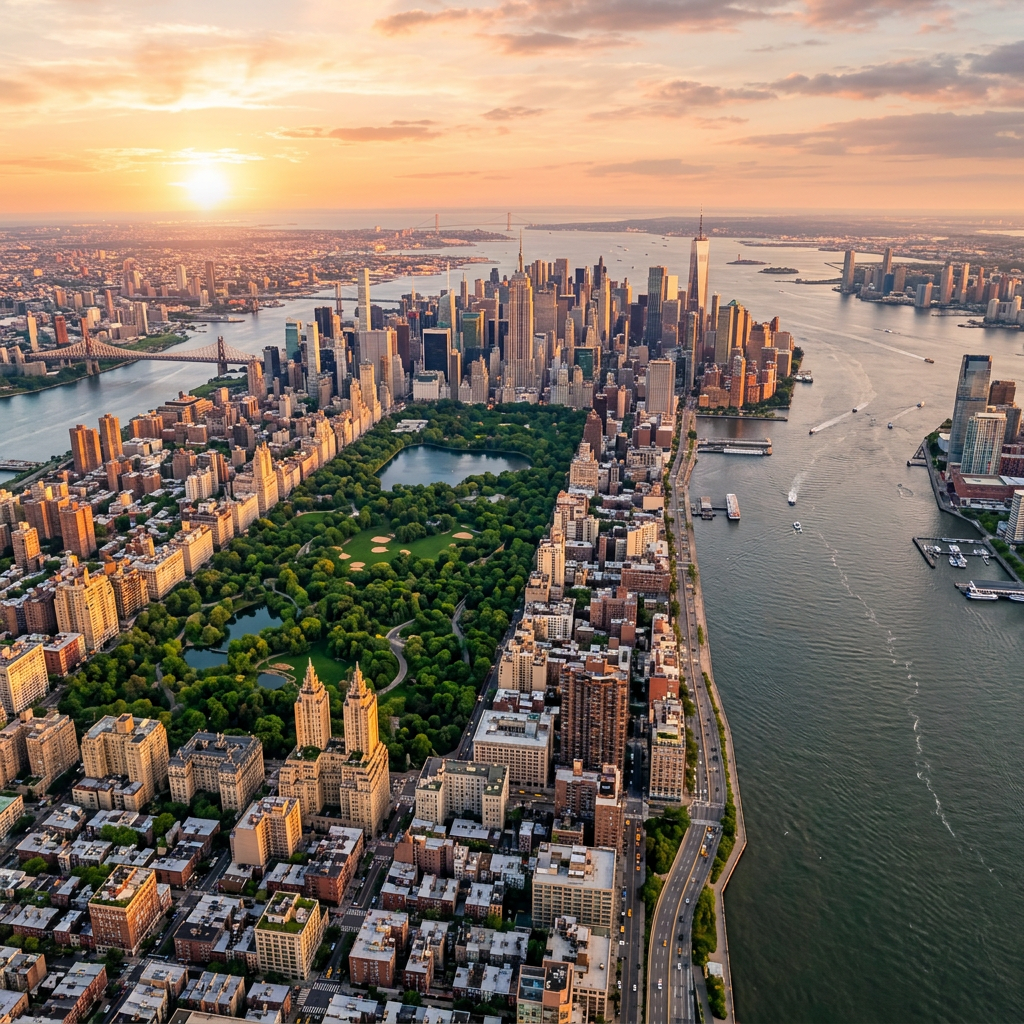
Other cities have beautiful buildings. New York has skylines — plural, because it has several. Lower Manhattan’s financial district, dense and dark with history. Midtown, absurdly vertical, crowded with icons. The art deco crown of the Chrysler Building catching afternoon light. The Empire State Building, still somehow managing to look regal despite a century of competition.
But step away from the postcard views and the architecture becomes even more interesting. The brownstones of Brooklyn’s Park Slope, warm and domestic and unhurried. The cast-iron facades of SoHo. The High Line — an old elevated freight railway transformed into a linear park, threading through Chelsea with views into artists’ studios and across the Hudson.
New York builds over itself, under itself, around itself. Every layer of the city is a different era of ambition made physical.
The Intangible Thing
Here is what travel writers don’t always admit: some cities have a feeling that you can’t fully account for. Paris has romance built into its stone. Kyoto has a kind of serene weight. And New York has possibility.
There is something in the New York air — literally or otherwise — that makes you feel like things could happen. That you are close to something. The city was built by people who came here with nothing and made something, and that energy hasn’t left. It lives in the way New Yorkers talk about their city — with irritation, pride, and a fierce, almost embarrassing love.
You will complain about the noise. You will spend twenty minutes trying to hail a cab in the rain. You will pay twelve dollars for a coffee and feel genuinely shocked by it. And then you will turn a corner and see the Williamsburg Bridge lit up against a violet sky, or stumble into a jazz bar where a pianist is playing like no one is watching, and you will understand — completely, bodily — why people keep coming back.
Summary
New York City earns its reputation not through any single attraction or landmark, but through the overwhelming, cumulative effect of everything it contains. It is the world’s most concentrated expression of human ambition, creativity, and diversity. It is relentless and generous, exhausting and electrifying. It is, by almost every meaningful measure, unlike anywhere else on earth.
Is it the greatest city in the world? That’s a conversation worth having over a very long dinner. But it is almost certainly the most alive — and that, for a traveller, might be the same thing.
Next in the series: Why Tokyo Will Quietly Rearrange the Way You See Everything.
Frequently Asked Questions
Q: When is the best time to visit New York City?
Late September through early November is arguably ideal — mild temperatures, clear skies, and the city’s energy at its most focused. Spring (April–May) is a close second. Summer is hot and crowded but has a certain electric buzz; winter, particularly around the holiday season, is magical if you dress appropriately.
Q: How many days do you need in New York?
A first visit warrants at least five days to scratch the surface. A week gives you room to wander without agenda, which is when the city reveals itself properly. Longer is always better.
Q: Is New York City safe for tourists?
As with any major city, awareness and common sense serve you well. New York is considerably safer than it was in previous decades. Most tourist areas — Manhattan, DUMBO, Williamsburg, Astoria — are busy and well-serviced. Stick to populated areas late at night and trust your instincts.
Q: What’s the best neighbourhood to stay in?
For first-timers, Midtown or the Upper West Side puts you close to major landmarks. For atmosphere and character, consider staying in Brooklyn — DUMBO, Brooklyn Heights, or Park Slope — and commuting into Manhattan. It changes the experience entirely and usually means a better hotel for less money.
Q: Do I need to tip in New York?
Yes, and generously. Restaurants: 20% is standard. Taxis and rideshares: 15–20%. Hotel housekeeping: $3–5 per night. Tipping is not optional — it is how service workers in New York earn their living.
Written by Brett Hayhoe
The World Traveller Series — Entry No. 1
© Brett Hayhoe. All rights reserved. This article is the opening instalment of an ongoing travel series exploring the world’s most extraordinary cities and destinations.
Discover more from Ask Brett
Subscribe to get the latest posts sent to your email.